0

Category: Uncategorized

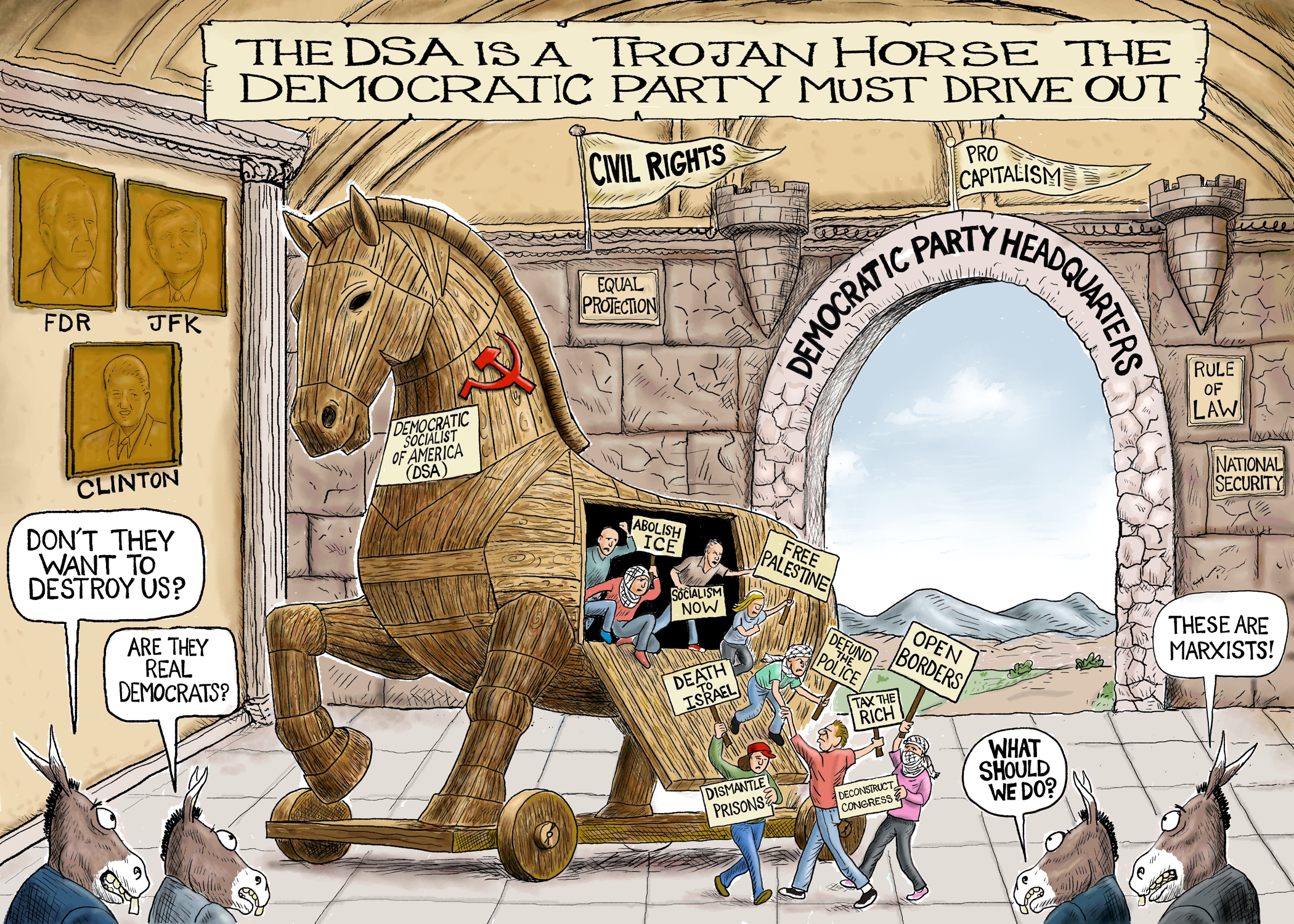
Political cartoon of a trojan horse filled with protesting DSA members inside of the Democratic Party HQ

The DSA is a Trojan Horse the Democratic Party Must Drive Out

This article was originally published by the Times of Israel on July 13th, 2026, written by Adam Milstein.

The DSA is a Trojan Horse the Democratic Party Must Drive Out

In January 2023, I wrote about “The Undeniable Link Between Antisemitism and America’s Decline”. I described a convergence between the radical left and radical Islam, the red-green alliance. It was attacking the liberal values that make America exceptional, using hatred of Jews and Israel as its leading edge.

In a February 2026 article, “Anti-Israel Democrats Are Radicalizing The Party,” I warned that the Democratic Socialists of America (DSA) and other anti-Israel insurgents were radicalizing the Democratic party. The influx of hardline candidates running on the Democratic ballot line is no longer fringe; it is a coordinated attempt to push the party beyond economic progressivism and into positions on Israel, public safety, and foreign policy outside the American mainstream.

I’ve warned about this convergence for 10 years and, while the threat once felt abstract, it no longer does.

DSA activists have infiltrated political power. They now control New York City’s mayor’s office, hold a larger bloc in the New York State Legislature, have secured major congressional primary wins, and just unseated a 30-year incumbent in Colorado.

A Wake-Up Call

Treating this movement as an eccentric wing of progressive coalition-building is a fatal mistake. In Colorado’s 1st Congressional District, DSA-endorsed Melat Kiros defeated 30-year incumbent Rep. Diana DeGette. Kiros ran on ending U.S. military aid to Israel and won by five points despite heavy spending by super PACs to stop her. That came just a week after DSA-backed candidates swept New York primaries, unseating the chairman of the Congressional Hispanic Caucus. These events clearly signal where things are headed.

The DSA is a trojan horse poisoning the Democratic Party from within. If the party wants a future, it must drive these extremists out before the colonization is complete.

The Radical Anatomy of a Hostile Takeover

To understand why a purge is necessary, Democrats must look past the DSA’s populist marketing and examine its core doctrine.

Policy research published by the Manhattan Institute and City Journal analyzing the DSA’s official platform, “Workers Deserve More!”, exposes an organization driven by extreme anti-Americanism. They do not seek reform; they view the United States as an oppressive “Empire” whose norms must be dismantled.

Behind campaign rhetoric about affordable housing lies a rigid Marxist framework. As City Journal notes, the DSA’s official text explicitly calls to “win the battle for democracy, draft a new constitution, and create a democratic socialist republic.” Its economic mandate includes nationalizing major sectors, eliminating private health insurance, and seizing properties from private landlords.

Domestically, its platform advocates dismantling the judicial and law-enforcement apparatus. This is not criminal justice reform; the DSA campaigns to eliminate the policing and incarceration systems it sees as protecting the capitalist order, alongside open-border policies. It also demands abolishing the U.S. Senate and subordinating the Presidency and Supreme Court to a centralized legislature.

The Anti-Israel Plank as a Core Weapon

Nowhere is the DSA’s radicalism more dangerous than in its commitment to anti-Zionism. For the DSA, opposition to Israel’s existence is not a secondary foreign-policy debate; it is a litmus test anchored in its governing text.

Analysts note that the DSA functions as a strict ideological enforcement mechanism: any candidate or member who deviates from its anti-Zionist platform or affirms Israel’s right to exist faces swift expulsion or denial of endorsement. Its platform explicitly names Jerusalem as the capital of a Palestinian state, hardcoding anti-Zionism as a fundamental tenet.

This hostility is a proxy for animus toward Western civilization and American global leadership. By aligning with hostile anti-Western regimes under the banner of “anti-imperialism,” DSA drags mainstream politics into a dark arena.

This dynamic is bigger than any one candidate. New York Mayor Zohran Mamdani built an agenda that strips antisemitism protections from Jews unless they renounce their connection to Israel, while Kiros pledged to end all military assistance.

For the Jewish community, the danger is immediate: the DSA’s rise is tied to an effort to strip antisemitism protections from Jews unless they renounce their connection to the Jewish state.

The Trojan Horse and the “Dirty Break

The DSA’s core deception is presenting itself as part of the Democratic Party while advancing ideas at odds with the party’s values. It does not see itself as a wing of the party; it sees the party as a host organism to be drained and discarded. As documented by political journals like City & State New York, today’s DSA organizers are explicitly executing what they call the “dirty break.” They use the Democratic Party’s ballot access, volunteers, and credibility as tools of convenience while building an independent Marxist-aligned infrastructure designed to break away and destroy the party from within.

The organization’s youth wing formalized this as an official strategy in a 2022 convention resolution. Even former DNC Chairman Jaime Harrison put it bluntly to DSA candidates: if you don’t support the party, don’t use its ballot line, volunteers, or resources to get elected.

Political reporting confirms this “party surrogate” or “party-within-a-party” model. Through structures like the “Socialists in Office” committee, elected DSA officials are bound to caucus weekly, coordinate legislative action, and vote as a unified socialist bloc answering to an external organization rather than the Democratic Party or their broader constituency.

Time to Purge the Poison

For years, the Democratic establishment has responded to this insurgency with quiet accommodation, fearful of alienating a vocal activist base. Every act of appeasement has only legitimized a group working toward the party’s dissolution. The victories in New York and Colorado prove that the time for polite disagreement has passed.

I have spent years arguing that antisemitism is never only about Jews – it is a leading indicator of a society’s broader institutional and moral health. The DSA’s rise fits that pattern. Hatred of Jews has historically been the ideology radical movements borrow when they need a common enemy to attack the liberal establishment.

Democratic leadership must stop treating the DSA as defiant progressives and start treating it as an existential threat to the party’s survival and to the American-led order. The party must deploy institutional tools at its disposal to enact a total purge:

  • Strip Committee Assignments: Strip DSA-aligned officials of committee assignments and legislative authority. No power should be granted to those who answer an external Marxist caucus.
  • Cut Financial and Institutional Lifelines: Pull campaign funding, digital resources, and institutional support from candidates running on the socialist surrogate platform.
  • Deny the Ballot Line: Protect the party’s ballot line from being hijacked by an organization whose stated goal is a “dirty break”.
  • Wage Aggressive Primary Campaigns: Recruit, fund, and back mainstream primary challengers to unseat every sitting DSA politician.

The Democratic Party cannot remain a governing institution while incubating a movement dedicated to its destruction. Leadership must name the DSA for what it is, draw a line before voters, and drive this trojan horse out before the takeover becomes irreversible.

Beyond Advocacy: Why the Jewish Diaspora Must Stand With Israel, Not Just For It

This article was originally published by the Jerusalem Post on June 22nd, 2026, written by Adam Milstein.

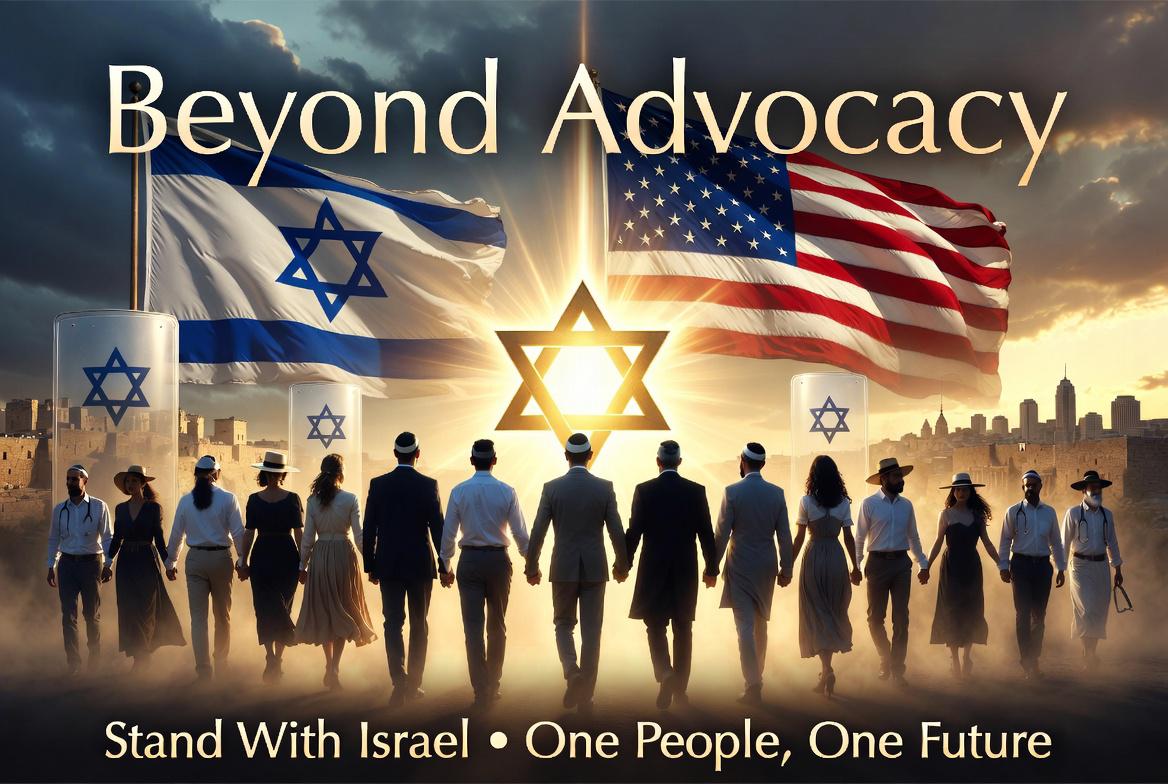
Beyond Advocacy: Why the Jewish Diaspora Must Stand With Israel, Not Just For It

In my recent piece, “Diaspora Jewish Resilience Will Define Our Future,” I outlined a roadmap for confronting the surge in antisemitism reshaping American Jewish life. I argued we must move from a reactive to a proactive posture across our communal institutions.


Here, I want to go deeper into the first and most foundational pillar of that roadmap: the existential necessity of a true strategic partnership between Israel and the Jewish people in the Diaspora.


From Israel’s founding through the late 20th century, the Jewish state served as the unifying center of American Jewish life. Over the last two decades, it has increasingly been recast as a divisive wedge issue. The October 7 massacre and the subsequent wave of antisemitism partially reversed that shift, but the dominant posture of American Jewish institutions has not fundamentally changed. It remains one of advocacy: defensive support of Israel or fierce criticism of the actions of its government.


For decades, we have treated our relationship with the Jewish state as a cause, a charity, or a political position, rather than as a bilateral strategic partnership essential to the survival of the entire Jewish people. Both those who rallied for Israel and those who used dissent to claim moral distance didn’t treat Israel as something they were personally, inseparably bound to. That model is broken.


The Realities of a Shared Threat Environment


For centuries, Jews were hated because they didn’t have a state. Today, Jews are hated because they do.


Violent anti-Zionism and antisemitism have become deeply embedded across the political spectrum. Jews in the Diaspora are targeted on campuses, in cultural institutions, and on the streets. Israel faces military, diplomatic, and ideological assaults unlike anything in recent memory. These are not separate challenges; they are localized manifestations of the same historic hatred.


The future of our people depends on recognizing a stark reality: diaspora Jews and Israeli Jews are not merely distant relatives. We are brothers and sisters, we are strategic partners whose security, prosperity, and future are entirely inseparable. We are fighting in different fronts of the very same war.


Getting Our Own House in Order


A proactive strategic partnership requires discipline and shared goals. It also requires us to honestly recognize that those within our community who work against these goals are not engaging in healthy debate, they are undermining Israel’s security and, by extension, weakening the safety of Jews here at home.


This is why Israel’s Ambassador Yechiel Leiter recently leveled sharp criticism at J Street, arguing that efforts to condition Israel’s ability to defend itself are part of a broader attempt to weaken the Jewish state at a moment of existential threat. Organizations like J Street believe they can affirm Jewish values while separating themselves from the realities of Israeli survival. They cannot. When Jews lend legitimacy to campaigns that restrict Israel’s self-defense or make it a partisan wedge, they do real damage, weakening Israel abroad and leaving diaspora Jews more vulnerable at home.


Distancing Yourself from Israel Won’t Save You!


Too many prominent Jews believe there is a path to mainstream acceptance that runs through public distancing from Israel. History and current events prove this to be a dangerous illusion.


Consider Nadav Lapid. The award-winning Israeli filmmaker has been a vocal critic of the Israeli government. Yet when a Marseille film festival invited him to serve on its jury, antisemitic activists demanded his removal, simply because his project received funding from Israel’s film fund. His criticism did not matter. His Jewishness was enough to mark him for exclusion.


History’s Unforgiving Lessons


These examples find tragic parallels in Weimar Germany. Between 1919 and 1933, educated, integrated Jews believed accommodation and distance from more visibly Zionist brethren would protect them. They signaled their patriotism and criticized Zionism, convinced that shedding objectionable parts of their identity would purchase safety.


It did not work. You cannot cleave enough of yourself to satisfy forces that reject the whole. There is no formulation of “I’m Jewish, but…” that has ever stopped a pogrom.


For nearly 2,000 years, the default diaspora response was to petition rulers and appeal to the conscience of majority. That was rational for a stateless people. But that era is over. We have a Jewish state and a proven model of Jewish strength. We must stop reaching for obsolete tools when the moment demands collective resilience and self-reliance.


What a Proactive Strategic Partnership Looks Like


We must stop treating Israel as a charitable cause and start treating it as a core institutional asset. Israel has spent 78 years building a genuine culture of survival. Its expertise in security, intelligence, innovation, civil defense, and crisis communication are Jewish assets the diaspora must actively leverage.


A truly proactive strategic partnership must be built across four fronts:


Israel as Global Shield: Israel must lead the global fight against antisemitism not merely as a moral voice, but as a sovereign state deploying the full instruments of national power. Its intelligence agencies, diplomatic networks, and technology sector are assets no diaspora organization can replicate. Israel should share threat intelligence with Jewish communities worldwide, use diplomatic leverage to hold governments accountable for antisemitic incitement, and mobilize its innovation ecosystem to dismantle hate networks at scale. The diaspora has long fought antisemitism with advocacy; Israel can fight it with state power. That asymmetry is a strategic resource we have barely begun to use.


Diaspora Communal Infrastructure: Jewish organizations and community centers must actively integrate Israeli security expertise and tactical know-how directly into their institutional frameworks.


Information Warfare: Diaspora leaders must collaborate with Israeli counterparts to build global, tech-driven networks capable of countering coordinated disinformation and ideological threats in real time.


Educational Realignment: Our schools, camps, and youth programs must build direct partnerships with Israel, teaching the next generation that attacks on Israel and on diaspora communities are born from the same antisemitic framework—equipping them with the resilience to face these threats without apology.


We are one people navigating the exact same threat environment. When Israel is weakened, the diaspora is weakened. The approval of others is a fragile foundation for survival; collective strength and mutual reliance are the only durable ones.


The future of the Jewish people will not be secured by making eloquent arguments or proving our acceptability to those who hate us. It will be secured by our willingness to stand with Israel, draw from its strength, and defend our shared future as one.

We built them before. We must build them again

This article was originally published by the Jerusalem Post on May 13th, 2026, written by Adam Milstein.

We Built Them Before. We Must Build Them Again

In my recent piece, “Diaspora Jewish Resilience Will Define Our Future”, I outlined a short-term and a long-term roadmap for confronting the continued surge in antisemitism reshaping Jewish life in America today. Here, I want to go deeper on what an economically resilient Jewish future requires. And what our own history teaches us about how to build it when the doors begin to close.

For past generations of diaspora Jews in America, discrimination and exclusion from economic, social, and cultural life were the norm. Jews were shut out of prestigious law firms, financial institutions, hospitals, universities, and corporate leadership positions. Elite institutions enforced quotas on Jewish admissions. Professional advancement came with invisible ceilings, and the social clubs and business networks that determined success were often closed to them.

Rather than wait for acceptance or rely on the hope that things would eventually improve, Jews built their own alternative institutions that would not only serve the Jewish community but also contribute enormously to American society as a whole.

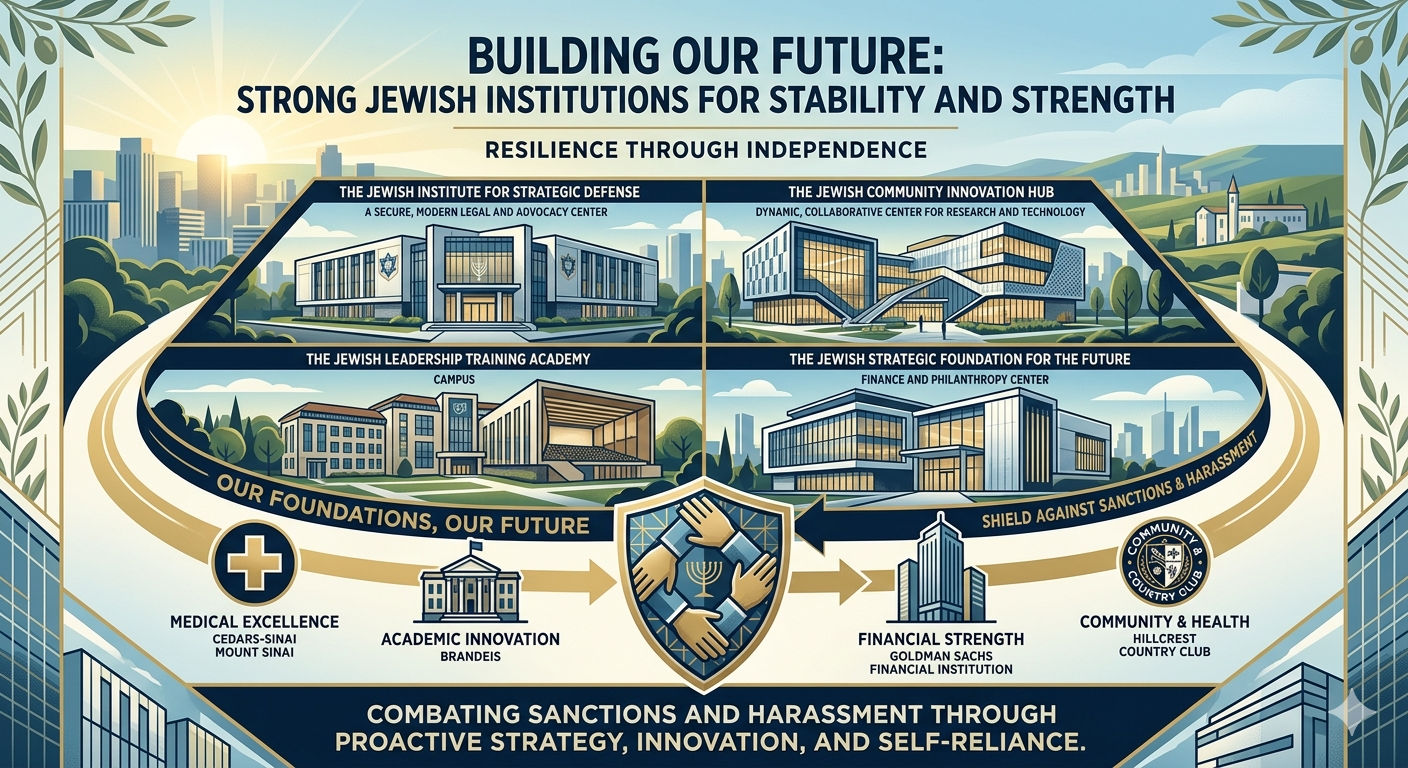
When Jewish doctors and medical professionals were denied hospital privileges, they responded by creating world-class medical centers. In Los Angeles, Cedars-Sinai Medical Center became a beacon of excellence. In New York, Mount Sinai Hospital and Montefiore Medical Center were founded to ensure that Jewish physicians could practice medicine freely and Jewish patients could receive high-quality care without facing discrimination. These institutions went on to become pillars of American medicine, serving millions and advancing medical research.

When Jewish financiers were locked out of the old-line banking establishment, they did not accept second-tier status. Instead, they built firms that would reshape global finance: Goldman Sachs, Kuhn, Loeb & Co., Lehman Brothers, and Morgan Stanley. These firms emerged directly from the reality that Jewish talent had to create its own doors when others remained firmly closed, ultimately achieving leadership in international markets.

Shut out of the established East Coast cinema industries and elite social networks, Jewish immigrants helped create the modern film industry from scratch. They founded major studios, built distribution networks, and shaped one of America’s most influential cultural exports. Warner Bros., MGM, Paramount Pictures, 20th Century Fox, and Universal Pictures stand as enduring testaments to that ingenuity and drive, entertaining and influencing generations worldwide.

When academia imposed quotas and systemic exclusion, the Jewish response was equally bold. Brandeis University was founded as a direct answer to discrimination, built on the principle of merit over prejudice. Hebrew Union College and Yeshiva University expanded educational opportunities and enriched intellectual life at a time when many sought to restrict Jewish access.

And when Jews were barred from the informal spaces where relationships and careers were built, they created their own. Hillcrest Country Club in Los Angeles and similar institutions became vibrant ecosystems for business, philanthropy, and leadership.

These were not acts of separation but of necessity, courage, and vision. They transformed exclusion into excellence and opportunity, proving that building parallel institutions strengthens both the Jewish community and the broader society.

Over time, as legal and social barriers fell and Jews achieved remarkable success in American society, many assumed that chapter of history was permanently closed. But with the sharp and continued rise in antisemitism in recent years, old patterns of exclusion are re-emerging, often disguised as opposition to Israel that rapidly extends to all Jews, whether or not they identify as Jews, and/or support the State of Israel.

Across academia, corporations, medicine, media, and cultural industries, Jewish professionals increasingly encounter ideological gatekeeping, hiring discrimination, and barriers to advancement. This new form of antisemitism is subtler and more socially acceptable than in the past, making it harder to confront directly.

And once again, the lesson is becoming clear: the Jewish American community cannot rely on the goodwill of others for economic security. We must rediscover the self-reliant mindset that sustained our predecessors.

That means investing deliberately in our own economic infrastructure. Creating robust Jewish job pipelines, mentorship networks, venture capital funds, and rapid-response support systems for professionals facing discrimination. Building business associations and funding networks that connect Jewish talent to opportunities and ensure no one stands alone when doors begin to close. Prioritizing practical programs that deliver quick wins and build momentum across communities, including targeted workshops, emergency funds, and professional directories.

But we must also think bigger and construct a parallel, resilient infrastructure across key sectors just as those who came before us did. In education, endow faculty chairs, fund fellowships, and support independent research centers insulated from ideological coercion.

In medicine, research, technology, and biotech, expand mentorship programs, venture funding, and startup ecosystems where Jewish innovation can flourish. And we must invest in the next generation of startups, biotech ventures, and research labs where breakthroughs are made.

And in cultural industries like Hollywood and media, back new production companies, distribution platforms, and creative networks that protect Jewish voices from political litmus tests. That means backing studios, production companies, and creative networks in the spirit of those that built Warner Bros. and Paramount Pictures.

On top of all that, we need to strengthen financial networks and community capital funds to support sustained economic growth and independence. These efforts should be coordinated at a national level with clear metrics for success and measurable impact on employment and institutional strength.

This approach is not about withdrawing from American society, it is about ensuring full participation without requiring Jews to abandon their identity or support for Israel. It is about strength, preparedness, and collective responsibility in an era of uncertainty.

Our predecessors built enduring institutions under far harsher conditions and with far fewer resources. They turned necessity into one of the most remarkable stories of communal achievement in modern history. We can, and must, do the same.

The future of Jewish economic resilience in the diaspora will not be handed to us. It must be built, just as it was before, with determination, vision, and unyielding commitment to our people’s future.

By acting now, we honor the legacy of those who came before us and secure the path forward for generations to come.

Our predecessors understood this.

It is time to do it again.

Diaspora Jewish Resilience Will Define Our Future

This article was originally published by the Jerusalem Post on April 16th, 2026, written by Adam Milstein.

Diaspora Jewish Resilience Will Define Our Future

The American Jewish community built its institutions for a different era. They were designed in the decades following the Holocaust, when Jewish life in the United States was secure, socially integrated, economically advancing, and largely insulated from public hostility and anti-Jewish violence.

The priority was growth and prosperity: assimilating into the broader culture, contributing to society, and expanding Jewish establishments such as schools, synagogues, community centers, and cultural life. We invested heavily in Jewish continuity, education, and Holocaust remembrance, believing that hatred of Jews could be contained through awareness and public campaigns.

But we built for a world that no longer exists. Thinking it can never get as bad as in past generations, we said “Never Again,” and invested heavily in explaining and condemning Jew-hatred, yet far less in building the capacity to withstand it. That gap is now impossible to ignore.

In recent years, Jew-hatred came out of the shadows, becoming a persistent, adaptive force expressed through violence, dehumanization, and persecution. It persists across the alt and isolationist right, the progressive left, and Islamist movements, the latter two forming the Islamo-leftist alliance that converges into mainstream hostility toward Jews, the Jewish state, and the United States of America.

For years, many dismissed concerns about this growing alliance and the hatred of Jews that unites it. The warning signs were visible in academia, mainstream media, social media, politics, and international institutions. But too often, the response was rooted in the belief that education and awareness would be sufficient. It wasn’t.

Today those dynamics are entrenched. On university campuses and in K-12 education, anti-Jewish ideologies are embedded in curricula, normalized in student culture, and reinforced by faculty and leadership. Jewish students are isolated, marginalized, and in some cases violently attacked. Beyond campuses, Jewish businesses are targeted, individuals are attacked on the streets for speaking Hebrew, and hatred of Jews is normalized at scale across digital platforms.

And yet our communal response remains reactive. We issue statements, call for justice, track incidents, correct misinformation, and plead for empathy. These efforts matter, but they are insufficient and yield diminishing results. They rest on the assumption that if we argue well enough, we can reverse the trend. But violent Jew-hatred is not a debate to be won. It is a reality to be prepared for and fought.

To understand why this reactive posture persists, we must be honest about a deeper historical pattern. For nearly 2,000 years, diaspora Jews did not fight persecution. They appealed against it. From the courts of medieval Europe to the pogroms of Eastern Europe to the institutions of the modern West, the default Jewish response was to seek mercy: to petition rulers, appeal to the conscience of majorities, and ask for protection rather than build the power to secure it. This was not weakness. It was the rational response of a people without sovereignty or a state. But that era is over. We have a Jewish state. We have a proven model of Jewish strength. And yet too many in the diaspora still reach for the old tools, the petitions, the statements, the pleas, when the moment demands something entirely different.

In contrast, Israeli Jews have learned through lived experience to operate with a different mindset. They understand that threats are inevitable, that survival depends on preparation, and that others will not protect them. They take responsibility and secure their own future.

Jews in the diaspora, meanwhile, live with a false sense of security. When attacked, rather than being prepared, they ask others for help, hoping that warning non-Jews that hatred of Jews starts with the Jews but never ends with them will convince others to join the fight. It has not worked and it will not be enough. The naive hope that governments and institutions will provide protection creates a dangerous gap between perception and reality, a fragile sense of safety that recent years have repeatedly shattered.

This must change.

If we are serious about securing Jewish life in the diaspora for decades ahead, we must learn from our brothers and sisters in Israel and move from a reactive to a proactive posture across six areas.

First, we must build a strategic partnership with Israel. Israel is not merely a symbol of Jewish pride or a refuge of last resort. It is the world’s most advanced model of Jewish survival, with unmatched expertise in security, intelligence, crisis communication, and community resilience. The diaspora has largely treated Israel as a cause to defend rather than a resource to draw from. That must change. We should be actively learning from Israel’s security culture, civil defense frameworks, and hard-won experience countering both physical and ideological threats, and integrating them into our own institutions. We are one people. It is time we began defending ourselves as such.

Second, we must redefine security. Jewish communities need serious investment in physical and digital protection, including trained personnel, intelligence capabilities, and self-defense training. Preparedness is part of Israel’s culture. It must become part of diaspora Jewish culture.

Third, we must build real crisis infrastructure. Every Jewish institution, and every individual facing harassment, should have access to coordinated networks providing legal, communications, and security support in real time. This must include AI-enabled tools to counter the growing battlefield of information warfare. An AI-powered global Jewish response network should be a communal priority.

Fourth, we must strengthen economic resilience. As Jews increasingly face discrimination in hiring, business, and professional advancement, we must ensure that no one stands alone. That means building job pipelines, funding networks, and community partnerships that allow us to support our own in times of need.

Fifth, we must rethink Jewish education. Our schools, camps, and youth programs must evolve. Alongside identity and tradition, we must teach resilience, confidence, and awareness. Our children must graduate not only knowing who they are but fully prepared for the challenges they will face.

Finally, we must move from proud Jews to strong Jews. Pride is essential, but it is not enough. As Israel has demonstrated time and time again, strength means preparedness, self-reliance, and collective responsibility. It means building a community that is vibrant and durable no matter what the size of the challenge.

We are redefining our identity once again, navigating between past assumptions and future realities.

The future of Jewish life will not be secured by those who make the best arguments.

It will be secured by those who are prepared to defend it, build it, and lead it.

Adam Milstein is an Israeli-American “Strategic Venture Philanthropist.” He can be reached at [email protected], on Twitter @AdamMilstein, and on Facebook www.facebook.com/AdamMilsteinCP.

Nazi Germany and the Iranian Mullahs, Similar Dangers, Same Isolationist Excuses

This article was originally published by the Jerusalem Post on March 18th, 2026, written by Adam Milstein.

Nazi Germany and the Iranian Mullahs, Similar Dangers, Same Isolationist Excuses

Once again, the United States faces an enemy openly committed to its destruction. And once again, some American leaders respond with isolationism, partisanship, and moral confusion.

Before America entered World War II, the isolationist case rested on four pillars: this is not our fight, the threat is exaggerated, intervention serves special interests rather than American ones, and the cure (war) is worse than the disease. Each of those arguments is being made today about Operation Epic Fury against Iran, often in nearly identical language.

But this framing misses a critical reality that makes the arguments moot: Iran has long been a direct and dangerous adversary of the United States, responsible for attacks against American personnel and interests for decades.

This Is Not Our Fight

In 1940, Charles Lindbergh told audiences that Hitler and his campaign to conquer Europe was a European problem. America had oceans for protection and no obligation to bleed for foreign quarrels.

Today, the same geographic and moral distancing is applied by critics to Iran. The conflict is framed as a Middle Eastern dispute, an Israeli problem, something happening “over there.”

Never mind that during the U.S. transitional occupation of Iraq, Iranian-backed militias armed and trained by the Islamic Revolutionary Guard Corps (IRGC) were responsible for the deaths of at least 600 U.S. service members, according to Pentagon assessments. Iranian-designed explosively formed penetrators alone killed close to 200 American troops and wounded nearly 900 more.

Never mind that since October 2023, Iranian proxy groups have carried out more than 200 attacks on U.S. bases and personnel in Iraq, Syria, and Jordan, including the January 2024 drone strike on a U.S. base in Jordan that killed three American soldiers. Iran also launched direct missile strikes on U.S. forces at Al Udeid Air Base in Qatar in June 2025. Never mind that the Iran-backed Houthis’ Red Sea shipping attacks disrupting global trade and cyber operations targeting U.S. banks.

Iran may cast Israel as the “small devil,” but in reality, the regime has viewed the United States of America as the “Great Satan”, the true force it has been committed to destroying for decades.

The Threat Is Exaggerated

Isolationists of the 1930s consistently argued that Hitler’s rhetoric was bluster, that no leader would actually pursue the ambitions he had stated openly in print. Those who warned otherwise were accused of warmongering, of seeing monsters where there were merely grievances.

Iran’s leadership has spent four decades stating its intentions with unmistakable clarity. It does not hide its support for groups committed to killing Americans and Israelis. In fact, Iran’s campaign against the United States increasingly has moved onto American soil.

In 2022, the U.S. Department of Justice charged an Iranian Revolutionary Guard operative in a plot to assassinate former National Security Advisor John Bolton. In 2024, federal prosecutors unsealed charges against an Iranian-linked operative accused of planning the assassination of then-presidential candidate Donald Trump. The plot involved recruiting individuals to surveil and potentially carry out the killing at a political rally.

The Iranian Mullahs are radical Muslim fanatics whose “Death to America” is theological doctrine, not rhetoric. Supreme Leader, Ali Khamenei, equated the phrase to seeking refuge from Satan. Plots include the near miss 2022 Pompeo assassination attempt in Paris, the US-soil Masih Alinejad attempted kidnapping by IRGC, and targeting Joe Biden and Nikki Haley.

Despite these attempts, the response from a significant portion of Western commentary is the same: don’t take the rhetoric literally, look for the moderates, give diplomacy more time. The moderates have been waited for before.

This Is Really About Special Interests

The ugliest strand of 1930s isolationism was conspiratorial. A vocal faction insisted that the push toward involvement in Europe was being driven not by genuine American interests, but by Jewish influence.

This has been carefully laundered and returned. Today, when politicians insinuate that Benjamin Netanyahu manipulated President Trump, or when commentators suggest that pro-Israel lobbying, uniquely among all lobbying, somehow overrides the American national interest, they are recycling the same logic in more acceptable vocabulary. The insinuation is the same: American soldiers would not be in danger if not for Jewish pressure. But the truth is that American soldiers’ lives have already been taken by Iranian aggression.

Insinuating this as “Israel’s war” is at best a distraction from reality, and at worst an antisemitic dog whistle.

Intervention Will Only Make Things Worse

The isolationists’ final argument was consequentialist: entering the war would cost more than staying out. War, they argued, was the escalation, not the aggression that preceded it.

Listen to the critics of the current war and the structure is identical. Any military response is “destabilizing.” But this argument does not hold up under scrutiny.

For forty years, Iran has carried out attacks through a coordinated regional network directed by Iran’s Islamic Revolutionary Guard Corps. Relying on these proxy forces, the network includes an estimated 200,000 fighters across Lebanon, Iraq, Syria, Yemen, Afghanistan, and Pakistan, all operating within what Tehran calls the “Axis of Resistance.” Iran’s IRGC pursues global jihad per constitution and messianic Mahdism; Strait of Hormuz closures are economic jihad.

In the eyes of Iran apologists, Iran never acts, America only overreacts.

What the Parallel Reveals

The isolationists of the 1930s were wrong. They weren’t wrong because war is ever good, but because the alternative to confronting Hitler earlier was confronting him later, at far greater cost, after far greater atrocities.

The argument for patience and restraint sounds like wisdom. But there is a version of restraint that is not wisdom. It is the flattering name we give to the refusal to accept an uncomfortable reality.

Iran is not Nazi Germany. But the rhetorical playbook being used to argue against confronting Iran is, clause by clause, the same one used to argue against confronting Hitler. That should at minimum give pause to those confident that restraint, this time, will work out differently.

History does not repeat. But it does, as the saying goes, rhyme. And anyone who has read history will recognize the melody.

Adam Milstein is an Israeli-American “Strategic Venture Philanthropist.” He can be reached at [email protected], on Twitter @AdamMilstein, and on Facebook www.facebook.com/AdamMilsteinCP.
How Anti-Israel Democrats are Radicalizing the Party

This article was originally published by the NY Post on February 23rd, 2026.

Throughout history, political movements and societies that appease antisemitism eventually decay.

Antisemitism corrodes moral judgment, distorts truth, and undermines the very democratic values its enablers claim to champion. Societies that normalize hatred of Jews never stop there. They fail because they abandon clarity for ideology and principle for power.

Today, the Democratic Party risks following this same pattern.

The Party of Roosevelt faces a consequential choice that will shape its moral credibility and political future. The question is simple: Will Democrats confront antisemitism and anti-Zionist extremism within their ranks, or continue to excuse, elevate, and normalize it?

Will Democrats choose the path of ethical emptiness leading to political irrelevance? The path that treats Israel as uniquely evil, indulges obsessive anti-Zionists while insisting it has nothing to do with antisemitism, and punishes leaders who refuse to comply?

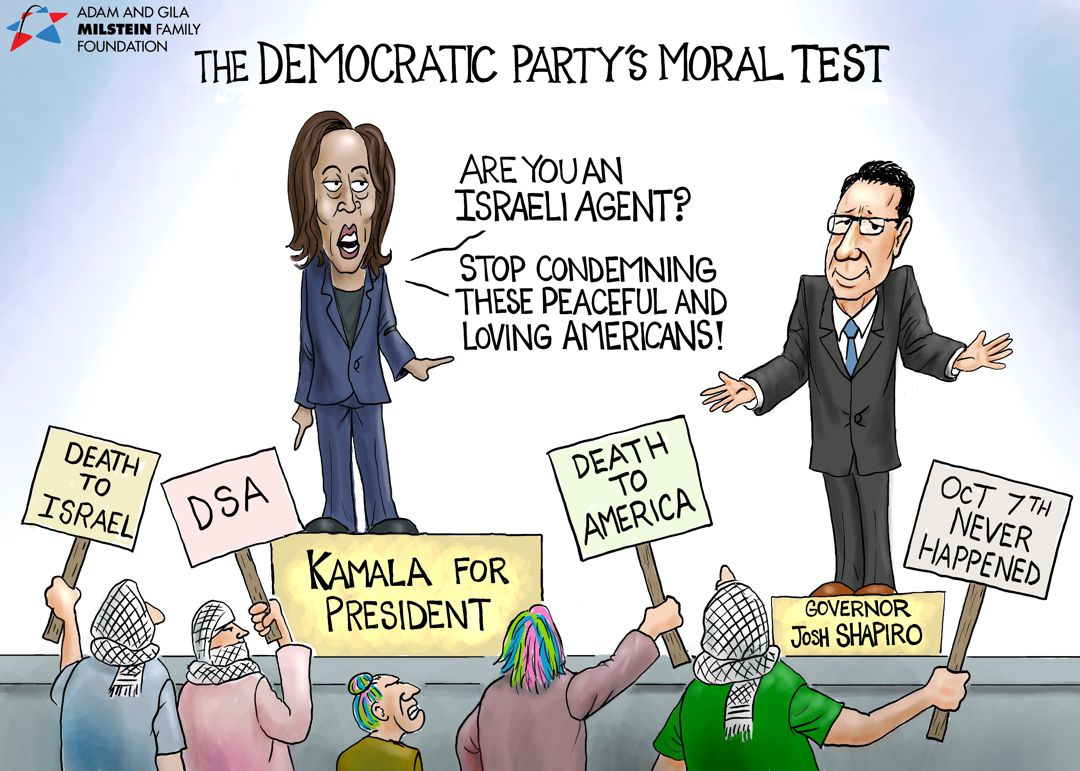
In 2024, Kamala Harris’s decision to elevate Minnesota Governor Tim Walz over Pennsylvania Governor Josh Shapiro exemplified this leadership failure.

Shapiro is among the most popular Democratic governors in the country. He is a pragmatic executive with broad appeal and proven ability to win as a Democrat in a swing state. His recent book provides insights into his vetting process as a potential Vice President.

He refused to yield to Harris team demands that he retract his condemnations of Hamas-supporting protestors following the October 7 massacre. He was also asked whether he had ever been an agent for the State of Israel, a blatantly absurd question for an American public servant of his stature. Despite his reputation as a skilled political leader, his responses disqualified him to Harris and her advisers.

Instead of selecting Shapiro, Harris chose Walz and lost overwhelmingly.

Since the 2024 election, Walz has struggled to maintain credibility within his own governorship and will not seek reelection. Harris elevated a weaker, less qualified leader to avoid offending the party’s anti-Israel activist wing. This was both bad politics and moral ineptitude.

Harris’ VP choice serves as a cautionary tale: when parties sideline their strongest leaders to appease ideological extremists, they lose.

The Democrats with Trembling Knees

Unfortunately, the Democratic party refuses to learn from past mistakes.

Scott Wiener, a prominent progressive and co-Chair of the California Legislative Jewish Caucus vying to succeed Nancy Pelosi, recently capitulated to far-left pressure by publicly labeling Israel’s self-defense actions in Gaza a “genocide.” This was not conviction; it was political survival.

Menachem Begin once declared, “I am not a Jew with trembling knees.” He understood that Jewish dignity and moral clarity require courage to stand firm even when inconvenient.

Wiener’s decision represents the opposite instinct, the posture of a Jew with trembling knees, someone willing to distort reality and abandon truth to appease an ideological mob. That a Democratic candidate feels compelled to adopt extremist language to survive a primary should alarm anyone concerned about the party’s future.

In Los Angeles, mayoral candidate Nithya Raman operates within the ideological ecosystem shaped by the Democratic Socialists of America (DSA). The DSA platform explicitly rejects Zionism, embraces the BDS movement, and frames Israel as a colonial enterprise. Increasingly, the DSA backs candidates in major cities who align with these positions and seek to advance them through public office, signaling a broader effort to translate ideological commitments into political power.

In New York, Zohran Mamdani, also part of the DSA, has embraced an agenda that systematically strips antisemitism protections from Jews and weakens pro-Israel measures. Under the guise of “anti-Zionism,” his movement seeks to remove Jews from protected minority lists, unless they renounce their connection to Israel.

These views are increasingly normalized under the banner of justice and human rights, even when they depart from core principles those terms uphold. The rhetoric does not advance genuine human rights but promotes rigid ideological agendas while presenting them in moral language that discourages scrutiny or debate.

This dynamic misleads the public and elevates narratives driven more by ideology than commitment to truth, pluralism, or democratic values.

An Alternative Path

The alternative path is one of credibility and seriousness, focused on issues that matter to most Americans. It is the path of leaders who refuse to surrender truth to extremists, who understand that defending liberal values means rejecting antisemitism in all forms, including when rebranded as “anti-Zionism.”

For a healthy American democracy, the United States needs two competent political parties capable of disagreeing vigorously while sharing commitment to fundamental ideals.

America’s strength has always rested on its founding liberal values and democratic alliances. A Democratic Party that cannot recognize this risks losing elections and its claim to moral leadership.

The choice before Democrats is clear: Will they follow leaders who distort Israel, normalize antisemitism, and lose races? Or will they elevate those who defend truth, reject extremism, and focus on real challenges facing Americans?

History suggests that parties, and nations, that choose wrongly fail to survive.

Why Antisemitism Is a Losing Strategy for the Conservative Movement

This article was originally published by the Jerusalem Post on 1/19/26, written by Adam Milstein

The death of conservative icon Charlie Kirk has prompted more than mourning. It has triggered a profound reckoning about the future of the American conservative movement, one that played out in real time at Turning Point USA’s recent AmericaFest convention.

Just three months after Kirk’s assassination, the organization he co-founded became the venue for an intense debate over a fundamental question: Should conservatism remain a coalition with clear moral boundaries, or should it become a broader movement that tolerates racists, antisemites, and conspiracy theorists in the name of “free speech” and “not canceling anyone”?

Ben Shapiro and Vivek Ramaswamy argued unapologetically that there is no place in conservatism for figures who traffic in antisemitism, racial hatred, or dangerous conspiracies. People like Nick Fuentes, Candace Owens, and Tucker Carlson, or those who excuse and legitimize them. On the other side were those who insisted that even open bigots belong in this broader coalition, warning that drawing lines would fracture the movement.

A movement without moral boundaries is hollow. Incorporating figures who reject the core values of America is both unethical and politically disastrous.

Shapiro put it bluntly from the Turning Point stage: “The conservative movement is also in danger from charlatans who claim to speak in the name of principle but actually traffic in conspiracism and dishonesty, who offer nothing but ire and despair, who seek to undermine fundamental principles of conservatism by championing aggravation and grievance. These people are frauds, and they are grifters, and they do not deserve your time.”


The Nick Fuentes Problem and the Heritage Warning

Nick Fuentes is not a misunderstood provocateur. He is an open racist, Holocaust denier, and antisemite who promotes propaganda rooted in hatred and conspiracy. His worldview is fundamentally opposed to the principles of America: equality under the law, pluralism, individual liberty, and constitutional democracy.

When Tucker Carlson gave Fuentes a platform in October 2025, it triggered a crisis at the Heritage Foundation. Heritage president Kevin Roberts defended Carlson, believing he was standing for free speech and against “cancel culture.” Instead, he triggered the very fracture he claimed to want to avoid. Multiple trustees resigned, staff revolted, and an antisemitism task force severed ties with the organization. The controversy overshadowed Heritage’s policy work and damaged its credibility as a serious institution. This is what happens when institutions prioritize tribal loyalty over principle, the damage is not merely reputational, it’s structural.

When conservatives like Ben Shapiro draw these boundaries, the attacks rarely engage the substance of the argument. Instead, they descend into identity politics, accusations that Shapiro’s position is driven by his Jewish identity, or that he and others like Bari Weiss are “Israel-firsters” with divided loyalties.

This is one of the oldest antisemitic tropes in history, repackaged for the digital age and it should alarm anyone who cares about a healthy conservative movement.


Online Fantasy vs. Political Reality

What makes this moment especially revealing is how disconnected online outrage is from political reality. A recent Turning Point USA poll of AmericaFest convention attendees found that over 85% consider Israel an ally of the United States. That is an overwhelming consensus.

Yet if you spent your time only on certain corners of X, you might think Israel is wildly unpopular among young conservatives. That perception is a manufactured reality.

Foreign adversaries like Russia, Qatar, and China, have learned a hard truth: conservatives remain one of Israel’s strongest bases of support. So, they target that support relentlessly. Through bot networks, coordinated disinformation campaigns, and amplification of extremist voices, they seek to fracture the right by pushing antisemitism into conservative spaces and reframing it as “anti-establishment” or “America First.”

Figures like Fuentes, Owens, and Carlson serve as integral pawns in this ecosystem of deception.


Electoral Math Doesn’t Lie

President Trump did not return to the White House in 2024 by mobilizing extremists. He won because of a measurable shift among moderates, particularly suburban women, Latino voters, and a growing share of Black voters. According to Pew Research, Trump drew nearly even with Kamala Harris among Hispanic voters, losing by only 3 percentage points.

Voters remain pragmatic. They care about stability, equal opportunity, and decency.

This is where defenders of figures like Fuentes, Owens, and their ilk fundamentally misread the political map. These voices shrink the electorate rather than expand it.

Shapiro captured this dynamic when he mocked the endless conspiracism that now passes for courage: “‘Just asking questions’, something my 5-year-old does… When grown men and women spend their days ‘just asking questions’ without seeking real answers, they’re seeding distrust.”

Suburban women do not see this racist or antisemitic rhetoric as edgy or brave. They see instability. Latino voters, many of whom are deeply religious, family-oriented, and patriotic, do not view racial grievance politics as “America First.”

There is no hidden army of voters waiting to be activated by embracing extremists. There is, however, a large bloc of persuadable Americans who will not tolerate ugliness masquerading as authenticity.

Every time conservative leaders are evasive about antisemitism, they make it harder to hold these voters and easier for Democrats to caricature the entire movement as intolerant.

President Trump himself has been unequivocal on this point. When asked by The New York Times whether antisemites belong in his coalition, he replied plainly: “I think we don’t need them. I think we don’t like them.” That clarity reflects an understanding that movements win by drawing lines, not erasing them.


Big Tents Need Boundaries

Serious movements draw lines. Winning coalitions requires trust. And trust cannot coexist with hatred

We have seen what happens when identity politics consumes a movement. The left allowed grievance, racial essentialism, and purity tests to hollow out liberalism, replacing genuine progress with intolerance disguised as virtue. Conservatives capitalized on these political errors throughout the 2024 campaign.

Now some on the right are flirting with the same mistake.

The paradox of the “big tent” is that it only remains standing if it has sturdy poles and clear boundaries. A tent with no structure collapses under its own weight. Similarly, a political coalition that refuses to exclude anyone, no matter how toxic, will eventually repel the very voters it needs to win.

The Turning Point poll also showed that a majority of attendees believe “radical Islam” is the greatest threat facing the West. Israel is a key strategic ally in this fight. Maintaining support for Israel is both sound foreign policy and good politics.

True conservatism is about preserving American values, democratic institutions, Western civilization, and embodying the moral clarity that allows a pluralistic society to thrive.

The future of conservatism will be shaped by leaders who understand that strength comes from principle. A big tent is only meaningful if it stands for something.

And a movement that cannot say no to antisemites will eventually lose the right to say it stands for America.

The choice is ours. Will we rise to meet it?

The Impact Forum and the next chapter of Jewish philanthropy

This article was originally published on eJewishPhilanthropy.com on December 16th, 2025, written by Adam Milstein.

Twenty years ago, I made a pivotal decision that changed my professional life. After a successful business career, I chose to shift my focus from making money to maximizing impact. I committed my wealth, time, energy, experience and networks to venture philanthropy, a strategic approach to fighting antisemitism, strengthening the American way of life and supporting the State of Israel.

I was inspired by pro-Israel philanthropic giants like Bernie Marcus, Sheldon Adelson and Newt Becker, who proved that hands-on philanthropy could reshape the ways by which the Jewish community can stand up and fight back. I didn’t want to simply write checks, and I quickly realized that real impact requires a disciplined approach: vetting the most effective nonprofits, motivating them to collaborate and helping them execute their vision. I began identifying, learning about and funding dozens of organizations, striving to leverage every philanthropic dollar into measurable results.

Identifying the systemic challenge

Ten years ago, I identified a core systemic challenge facing many innovative Jewish nonprofits.

Leaders from small and medium-sized nonprofits visited my office weekly. These were the community’s most innovative organizations, led by passionate people with proven concepts. Yet they were trapped in a cycle, spending 60-70% of their time fundraising instead of executing their critical missions. I watched brilliant leaders become professional fundraisers by necessity, which severely limited their ability to achieve long-term impact.

I recalled the simple, effective donor meetings organized by the late Newt Becker, where pro-Israel and pro-America smaller organizations gained direct access to committed philanthropists over lunch. Those gatherings allowed the nonprofits to focus on their mission and reduced the constant pressure to fundraise. Drawing on that experience and my own business background, I realized this model could be scaled and structured for greater efficiency.

Building an innovative philanthropic engine

The Impact Forum began modestly. A small group of philanthropists and I held monthly lunches. Two vetted groups would pitch their mission in a “Shark Tank”-style format, and we asked the attendees to fund the work that resonated with them most.

The foundational principle was, and remains, transparency and efficiency. One hundred percent of the donors’ support went directly to the nonprofits. There was no overhead or bureaucracy, just a direct connection between funders and mission-driven leaders.

We grew slowly through trusted networks, creating a family of like-minded philanthropists committed to supporting bold, nimble and mission-critical Jewish and pro-Israel nonprofits.

For participating organizations, the benefits were powerful: increased annual budgets, new funder relationships, collaborative partnerships, strategic direction and, most importantly, the ability to spend more time doing their work instead of chasing dollars.

For donors, the model solved the problem of discovery and vetting. They gained access to effective organizations identified through a trusted, shared network, saving them the burden of cold outreach and time-consuming personal due diligence.

After the COVID-19 pandemic, the Impact Forum evolved from monthly lunches to major quarterly dinners. These events featured keynote speakers like Bari Weiss, Douglas Murray and Naftali Bennett, alongside the nonprofit pitches. We also built a strong leadership group that funded operations and guided our strategic direction, strictly maintaining our core principle that all donations went to the organizations in full. The goal was clear: to help philanthropists and nonprofit leaders generate strategic and sustainable impact together.

We had built an effective, sustainable model, but we did not know how urgently it would be needed.

Post-Oct. 7: A changed world 

Since Oct. 7, 2023, the philanthropic response within the Jewish community has been unprecedented. New donors emerged, and long-term partners intensified their commitments. The Impact Forum’s model of efficient, coordinated and collaborative philanthropy proved essential during a moment of profound crisis.

Our unique model enabled us to rapidly support many organizations assisting Israelis affected by the Oct. 7 attacks and the subsequent war, including reservist combat soldiers, their families and a wide range of critical efforts on the ground. Simultaneously, we intensified our battle against rising antisemitism in America.

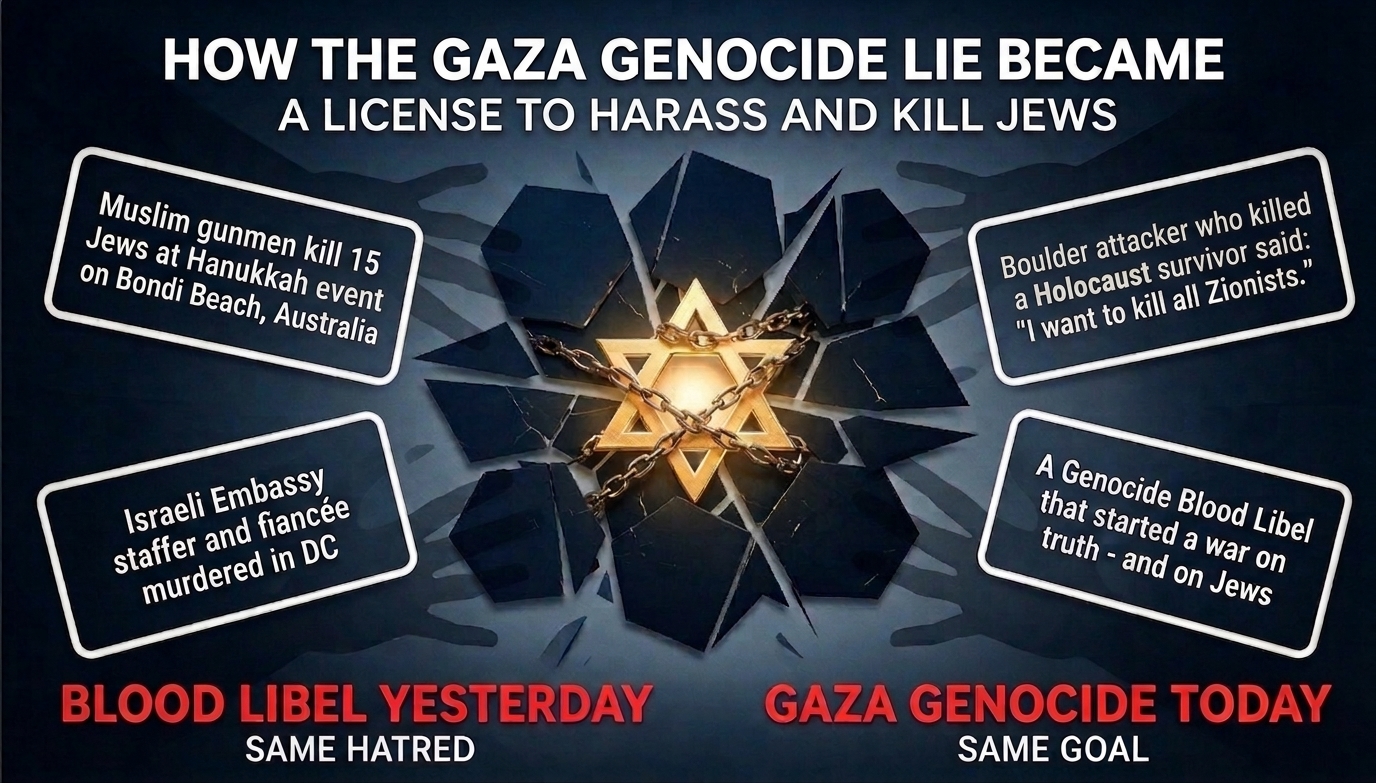
The recent terror attack on Bondi Beach in Australia on Hanukkah is a painful reminder that the forces driving antisemitic hatred and extremist violence are not confined to Israel or the Middle East. These attacks are not isolated incidents: they are part of a broader ideological war against Jewish visibility, Western values and moral clarity. Moments like this reaffirm why reactive giving is not enough — why infrastructure, coordination and strategic philanthropy are essential.

Since the Oct. 7 attacks, our network has experienced extraordinary growth, recently expanding the Impact Forum model to Dallas and Miami, where dedicated local leaders embraced the mission. Their support has been vital in advancing missions during these critical times.

The path forward

Three lessons stand out from the experience of this consequential period.

The first lesson is that, even in a crisis, there is profound hope. I have spent decades fighting antisemitism and anti-Israel hatred. While the threats intensify, I have witnessed a powerful counter-force emerge: an extraordinary willingness across the Jewish community and among our closest allies to step up, multiply efforts and fight together. Since Oct. 7 2023, thousands of people have become more engaged, more generous and more determined than ever before. Jews who were previously disconnected have rediscovered their identity and responsibility to stand up for their communities and for Israel.

The second lesson is that passive philanthropy is no longer sufficient. The challenges facing the Jewish people today are too great for passive philanthropy. Writing a check from time to time is not enough. We need people who treat philanthropic leadership with rigor, continuous learning, accountability and a strategic eye toward long-term impact. If we want stronger institutions, a safer Jewish community, a more resilient Israel and a brighter future for America, we need philanthropists who operate as active partners and engage the next generation in this work.

Finally, the third lesson is that this moment demands more from all of us. We are living through a consequential period for America, the Jewish people and the Jewish State. The stakes are enormous and the needs are urgent, but the Jewish spirit and determination is stronger than anything standing in our way.

When we work together, support one another and bring disciplined leadership to strategic philanthropy, we can meet this moment and build a safer, prouder, more successful Jewish future. The Impact Forum model isn’t the only answer, but it powerfully demonstrates what becomes possible when we build infrastructure for collaboration rather than competition among funders.

The next chapter of Jewish philanthropy is being written right now. The question is not whether we have the resources, we do. The question is whether we have the will to deploy them strategically, to think beyond individual transactions toward systemic change and to build networks that multiply impact.

If you’re a philanthropist looking for more effective ways to make a difference, I invite you to learn more about the Impact Forum model. 

This Hanukkah, as we place our menorahs in the window, we declare that in every generation, the Jewish people have the power to push back darkness and create light. That power is ours today, if we choose to use it together.

Adam Milstein is an Israeli American “strategic venture philanthropist.” He can be reached via email, X (formerly Twitter) and Facebook.

The “Tucker Test” of the Conservative Movement

This article was originally published by the Jerusalem Post on November 19th, 2025, written by Adam Milstein.

Tucker Carlson has never hidden his hostility and twisted obsession toward Israel, Jews, or anyone who stands with them. Recently, though, his anti-Jewish rhetoric reached a new level.

He is now elevating voices that not long ago were considered too extreme and shameful to be heard anywhere outside the shadows. Carlson has hosted several individuals with established antisemitic records, but the clearest example came when he hosted Nick Fuentes on his podcast—a Holocaust-denying, Hitler-praising, white nationalist, who calls for the defeat of “global Jewry.” For more than two hours, Carlson gave him a platform to rant about “organized Jewry” controlling America, to praise Stalin, and to smear Republicans who support Israel as victims of a “brain virus.”

Carlson didn’t challenge, counter, or elucidate his own views for the audience. He simply amplified Fuentes’ vile Jew-hatred.

Carlson also gave a platform to Darryl Cooper, an extremist historical revisionist, who argues the genocide of Jews in WWII was not a deliberate extermination plan but a logistical failure. Cooper claims Winston Churchill might be the “real villain” of WWII, rather than Hitler.

Carlson interviewed Jackson Hinkle, who describes himself as an “American Conservative Marxist-Leninist” and proponent of “MAGA Communism”, who is pro-Russia, strongly anti-Ukraine, pro-Iran, anti-Israel, and spreads conspiracies.

Carlson normalizes and legitimizes these extremist voices because they reflect his own beliefs. His goal is to popularize them within the conservative movement.

By doing so, Carlson has forced conservatives into a moment of truth.

Just as I introduced the Israel Test to expose the moral collapse of the left, the conservative movement now faces the “Tucker Test”: They must choose between standing with Carlson or standing with moral clarity.

The test has already illuminated who’s up for the task. Several conservative voices openly condemned Carlson. Senator Ted Cruz issued a clarion call to the right when he said, “If you sit with someone who says Adolf Hitler was very, very cool and their mission is to defeat ‘global Jewry,’ and you say nothing, you are complicit in that evil.”

On the other hand, the Heritage Foundation’s president, Kevin Roberts, rushed to defend Carlson as “a close friend” and labeled his critics a “venomous coalition.” The irony was hard to miss, since the Heritage Foundation was behind Project Esther, a national initiative that claimed to combat antisemitism.

Sadly, like Roberts, a growing number of influential figures in the conservative movement are failing the Tucker Test.

This is not solely about Israel or the Jews. It is about Carlson’s effort to pull the conservative movement into dangerous waters of conspiracy and paranoia. It mirrors what has happened on the left, where the center’s collapse opened the door for figures like Mamdani and other extremists to push their agenda away from mainstream values.

Like the Jew-hatred of the Islamo-Leftist alliance, Tucker’s first targets are Israel and the Jewish people. He promotes isolationism, consistently arguing that American support for Israel harms the United States. He portrays “Christian Zionists” as diseased and offers platforms to isolationists who want America to abandon its allies and retreat from its role as a global leader.

For decades, Republicans supported Israel because they believed it was morally right and strategically vital. They recognized Israel as the only democracy in the Middle East that shares America’s values. Over the years, many American leaders acknowledged the fact that “Israel is the largest American aircraft carrier in the world that cannot be sunk, does not carry even one American soldier, and is located in a critical region for American national security.”

Conservative governors have repeatedly passed anti BDS laws and conservative leaders consistently condemned antisemitism on the left. They understood that standing with Israel and the Jewish people aligned with American interests and moral clarity. This has always been less about Jews and Israel and more about the interests of America.

We now see a growing isolationist faction within the conservative movement. Figures like Tucker Carlson and Candace Owens promote conspiracy theories that, just like the far left, aim to divide Americans and erase moral boundaries. Their agenda is not principled conservatism, it is a rejection of the values that once defined the conservative movement: strength, principle, democracy, and an unwavering support for allies who share America’s ideals.

Although the left and the right are ideologically opposed, at the extremes they meet at the same point, conspiracy, paranoia, and Jew- hatred. At both extremes, moral conviction gives way to moral decay and facts are replaced by theories. The press, universities, and civic organizations, pillars that once upheld shared truth, have abdicated their roles as stewards of integrity. In this vacuum, people blame Jews for their problems while ignoring the forces that undermine the country’s connective tissue.

Throughout history, every society has blamed the Jews for its failures, yet it was never truly about the Jews. It was driven by deeper and more destructive interests held by those who weaponized blame. This pattern is now repeating itself within American politics – on both sides of the aisle. The far right’s new populism, like the left’s ideological radicalism, feeds on grievance and conspiracy. It rejects complexity in favor of scapegoats. It tears down institutions rather than reforming them. That corrosion of trust is dangerous not only to Jews but to a properly functioning democracy.

The genius of American conservatism was once its defense of liberty. It fought for the importance freedom anchored in faith, family, and strong institutions. If conservatives abandon those guardrails for demagoguery and digital mobs, they will not only fail the Tucker Test, but they will also destroy the very civilization they claim to defend.

The Tucker Test is about more than Tucker Carlson. It’s about whether conservatives will defend American exceptionalism or surrender to the isolationist fringe. Whether the right will stand for civilization and against bigotry.

Republicans have spent years calling out Democrats for failing the Israel Test. Now they must prove they hold themselves to the same standard.

Because if the conservative movement fails the Tucker Test, it will lose its moral authority and its claim to defend Western values.

The choice is clear: Stand with those who defend freedom, democracy, and the U.S.–Israel alliance or stand aside while antisemites poison your movement from within.

Adam Milstein is an Israeli-American “Strategic Venture Philanthropist.” He can be reached at [email protected], on Twitter @AdamMilstein, and on Facebook www.facebook.com/AdamMilsteinCP

Leading with Strength: Building the Jewish Future Beyond the War

This article was originally published by the Jerusalem Post on October 29th, 2025, written by Adam Milstein.

After two years of war that began with the horror of October 7th yet also brought remarkable courage and achievements, we’ve reached a moment that seemed impossible—a ceasefire that stands as a testament to Israel’s strength, resilience, and unity.

Twenty Israeli hostages returned home free from Gaza captivity. Israel dismantled Hamas’s military infrastructure, eliminated Hezbollah’s leadership including Hassan Nasrallah, decimated the Houthis in Yemen and their senior leadership, and destroyed Iran’s nuclear ambitions. The axis of resistance—Iran’s network of terror proxies spanning from Gaza through Lebanon to Syria, Iraq, and Yemen—has collapsed, at least for the immediate future. Israel demonstrated military and technological prowess that shocked the world.

After the October 7th debacle and the failures that allowed 1,200 Jews to be slaughtered, Israel rebuilt, regrouped, and responded with might and effectiveness. But victory on the battlefield doesn’t guarantee victory for the Jewish future. As antisemitism exponentially rises across the world and Israel faces growing isolation and delegitimization, our future will depend on what we choose to do now.


First, we must cultivate the October 8th Jews

The horror of October 7th created an opportunity. Across America, Jews who had drifted away from their identity came rushing back. The “October 8th Jews” rediscovered their Jewish identity and connection to Israel in the face of existential threat.

The numbers tell the story we’ve witnessed firsthand. According to UJA-Federation of New York’s 2025 study, 57% of American Jews reported feeling more connected to Israel or their Jewish identity after October 7th than before. 31% of American Jews are more engaged in Jewish life than before the attacks—a surge that sustained itself for 18 months.

This awakening represents the most significant shift in American Jewish identity in a generation. But surges don’t sustain themselves. Without deliberate investment, this energy will dissipate. We must build the infrastructure to keep this momentum and the next generations engaged, creating meaningful Jewish experiences that speak to their renewed sense of identity, deepen their connection to our community, and strengthen their enduring bond with the Jewish homeland.


Second, we must confront the war of the narratives

We must recognize that today, the fight for Israel’s survival extends beyond the physical battlefield. “The eighth battlefield”—the arena of media and social media—is where narratives are shaped and public opinion is won or lost. Our enemies understand this and invest heavily in spreading lies and distortions. To secure our future, we must take this front just as seriously, empowering voices that break through echo chambers, share the truth about Israel, confront misinformation, and ensure that our story is told with strength, clarity, and authenticity.


Third, we must build resilient, self-reliant pro-Israel communities

The violent surge of Jew-hatred after October 7th shocked Jewish communities around the world, but it should not have. The warning signs were there for years, yet, and as in 2021 and before,  we were unprepared for the threat. We must now focus on building pro-Israel communities that are strong, united, and self-reliant, able to withstand inevitable future attacks, both physical and digital, and to protect and support one another in times of crisis.

What does resilience look like in practice?

Better security for institutions. Synagogues, Jewish community centers, and schools need professional protection, not volunteers with good intentions. We need to invest in trained security personnel, advanced surveillance systems, and rapid-response protocols.

Self-defense training for young Jews. The days when Jews could rely solely on others for protection are over. We must teach our youth to defend themselves, both physically and online, against antisemitic attacks.

Legal resources. Jews facing discrimination need immediate access to skilled attorneys who understand antisemitism and can fight back through the legal system.

Crisis management and PR resources. When antisemitic incidents occur, victims need professional communications support to tell their stories effectively and counter false narratives.

IT and technology resources. Digital attacks are as damaging as physical ones. We need cybersecurity experts to protect Jewish organizations and individuals from online harassment and doxxing.

Stronger professional networks. Jews experiencing discrimination in their fields need to find others who can help them—alternative employment opportunities, professional support, and solidarity.


Fourth, we must treat antisemitism as an American problem, not a Jewish one.

The most dangerous misconception is to view antisemitism as a problem for Jews alone. In truth, it endangers all Americans and undermines the moral foundation of our society.

Antisemitism is the canary in the coal mine. When hatred of Jews becomes acceptable, intolerance spreads to others until the entire body convulses with division and violence. History have shown that what begins with the Jews never ends with the Jews.

The Islamo-Leftist alliance that targets Jews has a broader aim: its main target is America itself. Their goal is not only to destroy Israel but to dismantle Western civilization led by the United States. They brand both Israel and America as colonial oppressors, working to delegitimize them, sow division from within, and erode the very values that hold our societies together.

We must build broad coalitions to fight antisemitism on the right, on the left, and among radical Muslims. We can’t think narrowly. We need Christians, African Americans, Asians, and other groups who understand that the fight against Jew-hatred is a fight for America.

We also can’t get complacent about tactics. The antisemites have been creative—utilizing technology, massive funding, and sophisticated legal, PR, and digital strategies to radicalize people. They’ve weaponized social media. They’ve infiltrated universities. They’ve manipulated language to make hatred sound like justice.

We must push back with equal creativity and greater resources. We need to expose their funding sources. Trace their networks. Demand accountability from universities and media institutions. Strengthen laws that protect vulnerable communities. Use every tool available—legal, technological, political, and cultural—to dismantle the infrastructure of hate.

Israel’s accomplishments in this war prove that strength works. Moral clarity works. Refusing to apologize for defending your people, work.

The diaspora must learn these lessons. For too long, we’ve been told to stay quiet, avoid provocation, trust others to protect us. October 7th and the explosion of antisemitism that followed shattered that illusion.

The choice is ours. Will we rise to meet it?