
This article was originally published on eJewishPhilanthropy.com on December 16th, 2025, written by Adam Milstein.
Twenty years ago, I made a pivotal decision that changed my professional life. After a successful business career, I chose to shift my focus from making money to maximizing impact. I committed my wealth, time, energy, experience and networks to venture philanthropy, a strategic approach to fighting antisemitism, strengthening the American way of life and supporting the State of Israel.
I was inspired by pro-Israel philanthropic giants like Bernie Marcus, Sheldon Adelson and Newt Becker, who proved that hands-on philanthropy could reshape the ways by which the Jewish community can stand up and fight back. I didn’t want to simply write checks, and I quickly realized that real impact requires a disciplined approach: vetting the most effective nonprofits, motivating them to collaborate and helping them execute their vision. I began identifying, learning about and funding dozens of organizations, striving to leverage every philanthropic dollar into measurable results.
Identifying the systemic challenge
Ten years ago, I identified a core systemic challenge facing many innovative Jewish nonprofits.
Leaders from small and medium-sized nonprofits visited my office weekly. These were the community’s most innovative organizations, led by passionate people with proven concepts. Yet they were trapped in a cycle, spending 60-70% of their time fundraising instead of executing their critical missions. I watched brilliant leaders become professional fundraisers by necessity, which severely limited their ability to achieve long-term impact.
I recalled the simple, effective donor meetings organized by the late Newt Becker, where pro-Israel and pro-America smaller organizations gained direct access to committed philanthropists over lunch. Those gatherings allowed the nonprofits to focus on their mission and reduced the constant pressure to fundraise. Drawing on that experience and my own business background, I realized this model could be scaled and structured for greater efficiency.
Building an innovative philanthropic engine
The Impact Forum began modestly. A small group of philanthropists and I held monthly lunches. Two vetted groups would pitch their mission in a “Shark Tank”-style format, and we asked the attendees to fund the work that resonated with them most.
The foundational principle was, and remains, transparency and efficiency. One hundred percent of the donors’ support went directly to the nonprofits. There was no overhead or bureaucracy, just a direct connection between funders and mission-driven leaders.
We grew slowly through trusted networks, creating a family of like-minded philanthropists committed to supporting bold, nimble and mission-critical Jewish and pro-Israel nonprofits.
For participating organizations, the benefits were powerful: increased annual budgets, new funder relationships, collaborative partnerships, strategic direction and, most importantly, the ability to spend more time doing their work instead of chasing dollars.
For donors, the model solved the problem of discovery and vetting. They gained access to effective organizations identified through a trusted, shared network, saving them the burden of cold outreach and time-consuming personal due diligence.
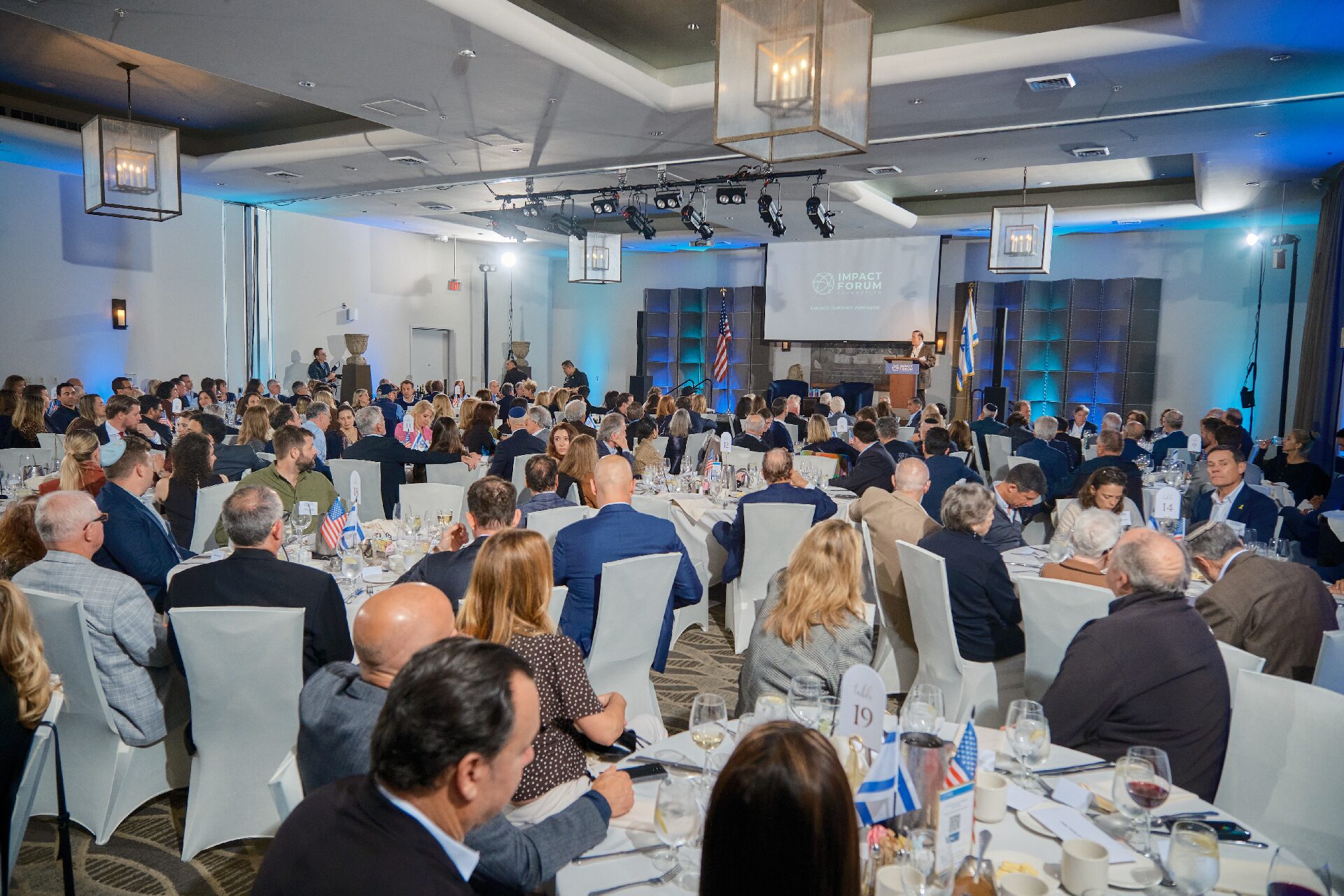
After the COVID-19 pandemic, the Impact Forum evolved from monthly lunches to major quarterly dinners. These events featured keynote speakers like Bari Weiss, Douglas Murray and Naftali Bennett, alongside the nonprofit pitches. We also built a strong leadership group that funded operations and guided our strategic direction, strictly maintaining our core principle that all donations went to the organizations in full. The goal was clear: to help philanthropists and nonprofit leaders generate strategic and sustainable impact together.
We had built an effective, sustainable model, but we did not know how urgently it would be needed.
Post-Oct. 7: A changed world
Since Oct. 7, 2023, the philanthropic response within the Jewish community has been unprecedented. New donors emerged, and long-term partners intensified their commitments. The Impact Forum’s model of efficient, coordinated and collaborative philanthropy proved essential during a moment of profound crisis.
Our unique model enabled us to rapidly support many organizations assisting Israelis affected by the Oct. 7 attacks and the subsequent war, including reservist combat soldiers, their families and a wide range of critical efforts on the ground. Simultaneously, we intensified our battle against rising antisemitism in America.
The recent terror attack on Bondi Beach in Australia on Hanukkah is a painful reminder that the forces driving antisemitic hatred and extremist violence are not confined to Israel or the Middle East. These attacks are not isolated incidents: they are part of a broader ideological war against Jewish visibility, Western values and moral clarity. Moments like this reaffirm why reactive giving is not enough — why infrastructure, coordination and strategic philanthropy are essential.
Since the Oct. 7 attacks, our network has experienced extraordinary growth, recently expanding the Impact Forum model to Dallas and Miami, where dedicated local leaders embraced the mission. Their support has been vital in advancing missions during these critical times.
The path forward
Three lessons stand out from the experience of this consequential period.
The first lesson is that, even in a crisis, there is profound hope. I have spent decades fighting antisemitism and anti-Israel hatred. While the threats intensify, I have witnessed a powerful counter-force emerge: an extraordinary willingness across the Jewish community and among our closest allies to step up, multiply efforts and fight together. Since Oct. 7 2023, thousands of people have become more engaged, more generous and more determined than ever before. Jews who were previously disconnected have rediscovered their identity and responsibility to stand up for their communities and for Israel.
The second lesson is that passive philanthropy is no longer sufficient. The challenges facing the Jewish people today are too great for passive philanthropy. Writing a check from time to time is not enough. We need people who treat philanthropic leadership with rigor, continuous learning, accountability and a strategic eye toward long-term impact. If we want stronger institutions, a safer Jewish community, a more resilient Israel and a brighter future for America, we need philanthropists who operate as active partners and engage the next generation in this work.
Finally, the third lesson is that this moment demands more from all of us. We are living through a consequential period for America, the Jewish people and the Jewish State. The stakes are enormous and the needs are urgent, but the Jewish spirit and determination is stronger than anything standing in our way.
When we work together, support one another and bring disciplined leadership to strategic philanthropy, we can meet this moment and build a safer, prouder, more successful Jewish future. The Impact Forum model isn’t the only answer, but it powerfully demonstrates what becomes possible when we build infrastructure for collaboration rather than competition among funders.
The next chapter of Jewish philanthropy is being written right now. The question is not whether we have the resources, we do. The question is whether we have the will to deploy them strategically, to think beyond individual transactions toward systemic change and to build networks that multiply impact.
If you’re a philanthropist looking for more effective ways to make a difference, I invite you to learn more about the Impact Forum model.
This Hanukkah, as we place our menorahs in the window, we declare that in every generation, the Jewish people have the power to push back darkness and create light. That power is ours today, if we choose to use it together.
Adam Milstein is an Israeli American “strategic venture philanthropist.” He can be reached via email, X (formerly Twitter) and Facebook.